
Berberine Supplements: Exploring the Health Benefits of Nature's Golden Alkaloid
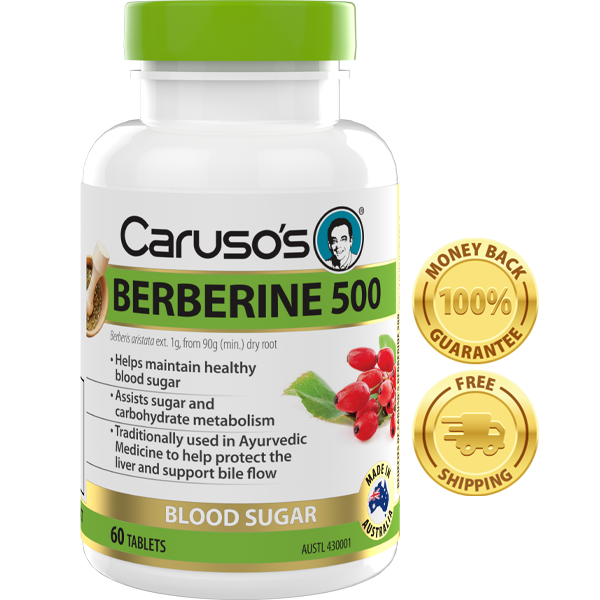
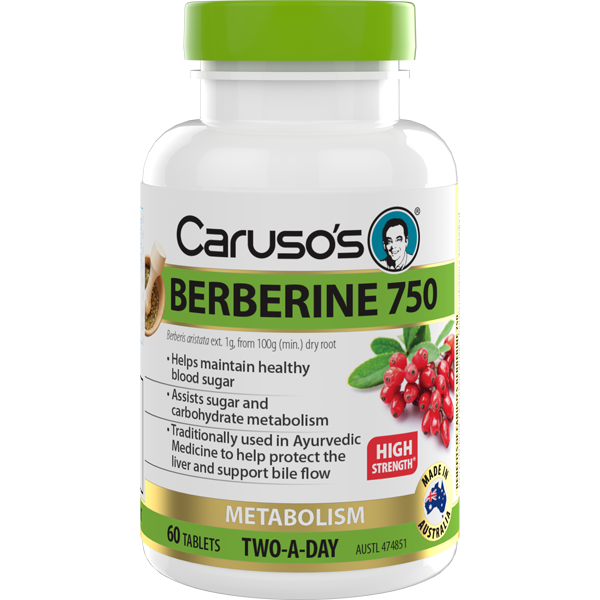
Berberine supplements have been shown to support healthy blood glucose levels, assist with carbohydrate metabolism and have been traditionally used in Ayurvedic Medicine to help protect the liver and support bile flow.
Berberine supplements have been shown to support healthy blood glucose levels, assist with carbohydrate metabolism and have been traditionally used in Ayurvedic Medicine to help protect the liver and support bile flow.
In Summary:
- Berberine is an alkaloid compound with a rich history in traditional herbal medicine and a growing body of scientific research supporting its diverse health benefits.
- Plants rich in Berberine have been a staple of traditional medicine practices in various cultures for centuries. Ayurvedic healers recognised its medicinal properties and used it to address a wide range of health concerns. 1, 2
- Berberine is a constituent found in several different herbs such as Indian Barberry (Berberis aristata), Barberry (Berberis vulgaris), Oregon Grape (Berberis aquifolium) and Goldenseal (Hydrastis canadensis). 2
In the world of natural supplements, few herbal constituents have garnered as much attention as Berberine. Traditionally sourced from the roots, stems and bark of Berberine containing plants, ancient Chinese and Ayurvedic health practitioners have been using Berberine plants in their healing formulas for thousands of years. Discovered by modern medicine in 1830, clinical research has continued to discover and report on modern health applications. 3

What are the benefits of taking Berberine supplements?
Helps Glucose Metabolism
Berberine has been shown to assist glucose metabolism making it a promising natural remedy for managing healthy blood sugar levels and supporting carbohydrate metabolism. Carbohydrate metabolism is a fundamental process occurring in all living organisms and involves the regulation of blood glucose levels. Carbohydrates are one of the three macronutrients and their metabolism involves a complex series of biochemical reactions. Proper carbohydrate metabolism requires the coordinated action of hormones such as insulin, glucagon, and others, along with various enzymes and metabolic pathways. 4
Bile Flow
Traditional Ayurvedic use suggests that Berberine has a beneficial impact on the flow of bile. Bile is a digestive fluid produced by the liver, which is stored and released from the gallbladder into the first part of the small intestine known as the duodenum. Bile acids, the primary components of bile, mix with and emulsify fats in food, allowing digestive enzymes to break them down more effectively. 5
Protects the Liver
Berberine possesses hepatoprotectant properties which helps protect the liver, according to traditional Ayurvedic Medicine use. The liver comprises around 2% of an adult’s body weight and is a critical organ responsible for over 500 important functions within the human body including producing bile. 6
Berberine Supplementation
Berberine stands out as a natural compound with therapeutic potential across a wide range of health concerns. Including a Berberine supplement in your daily routine may assist carbohydrate metabolism and help maintain healthy blood sugar. Its traditional use in Ayurvedic medicine to support bile flow and as a hepatoprotectant makes it a valuable addition to holistic health regimens.
Berberine in supplement form, allows you to embrace the ancient wisdom of traditional medicine and harness the power of modern scientific research.
Always read the label and follow the directions for use.
References
- Ren, S., Ma, X., Wang, R., Liu, H., Wei, Y., Wei, S., Jing, M., & Zhao, Y. (2021). Preclinical Evidence of Berberine on Non-Alcoholic Fatty Liver Disease: A Systematic Review and Meta-Analysis of Animal Studies. Frontiers in Pharmacology, 12, 742465. https://doi.org/10.3389/fphar.2021.742465
- Neag, M. A., Mocan, A., Echeverría, J., Pop, R. M., Bocsan, C. I., Crişan, G., & Buzoianu, A. D. (2018). Berberine: Botanical Occurrence, Traditional Uses, Extraction Methods, and Relevance in Cardiovascular, Metabolic, Hepatic, and Renal Disorders. Frontiers in Pharmacology, 9, 557. https://doi.org/10.3389/fphar.2018.00557
- Gao, Y., Wang, F., Song, Y., & Liu, H. (2020). The status of and trends in the pharmacology of berberine: A bibliometric review [1985-2018]. Chinese Medicine, 15(7). https://doi.org/10.1186/s13020-020-0288-z
- Grant, J. (2023). Carbohydrate metabolism: Understanding the biochemical pathways and regulation for energy production. Clinical & Medical Biochemistry, 9(1). https://www.walshmedicalmedia.com/open-access/carbohydrate-metabolism-understanding-the-biochemical-pathways-and-regulation-for-energy-production.pdf
- Cleveland Clinic. (2024). Bile. https://my.clevelandclinic.org/health/body/what-is-bile
- Cleveland Clinic. (2025). Liver. https://my.clevelandclinic.org/health/body/21481-liver